About the Project
How did Edo-period artists position viewers to experience Japan's famous landscapes? That's the question at the heart of Drawing from the Crowd—and we're inviting curious minds from around the world to help us find the answer.
The Project
"Drawing from the Crowd: A Citizen Science Platform for Mapping Ukiyo-e Cultural Geography" began as one of five projects selected for the 2024 Nippon Social Innovator's Collaboration (NSIC), funded by The Nippon Foundation. As the funder's stipulation was to create a socially impactful project with other scholarship alumni, this not only led to the project, but to an incredibly fruitful meeting of minds from interdisciplinary fields. Building on this foundation, we secured implementation funding through a Career Grant from the Graduate Campus at the University of Zurich.
The platform launched publicly in October 2025, and we began citizen science outreach in December 2025. We are now actively building our community of contributors while expanding our print collection through partnerships with institutions worldwide.
Goals
- Build Community through Citizen Science: Foster appreciation for Japanese cultural heritage and awareness of historical landscapes at local and international levels.
- Grow Knowledge Among Project Members: Enhance expertise in interdisciplinary, multilingual research at the intersection of art history and digital humanities.
- Advance Print Scholarship: Establish a methodology to assess how ukiyo-e prints encoded spatial relationships and positioned viewers to experience landscapes.
Our Mission
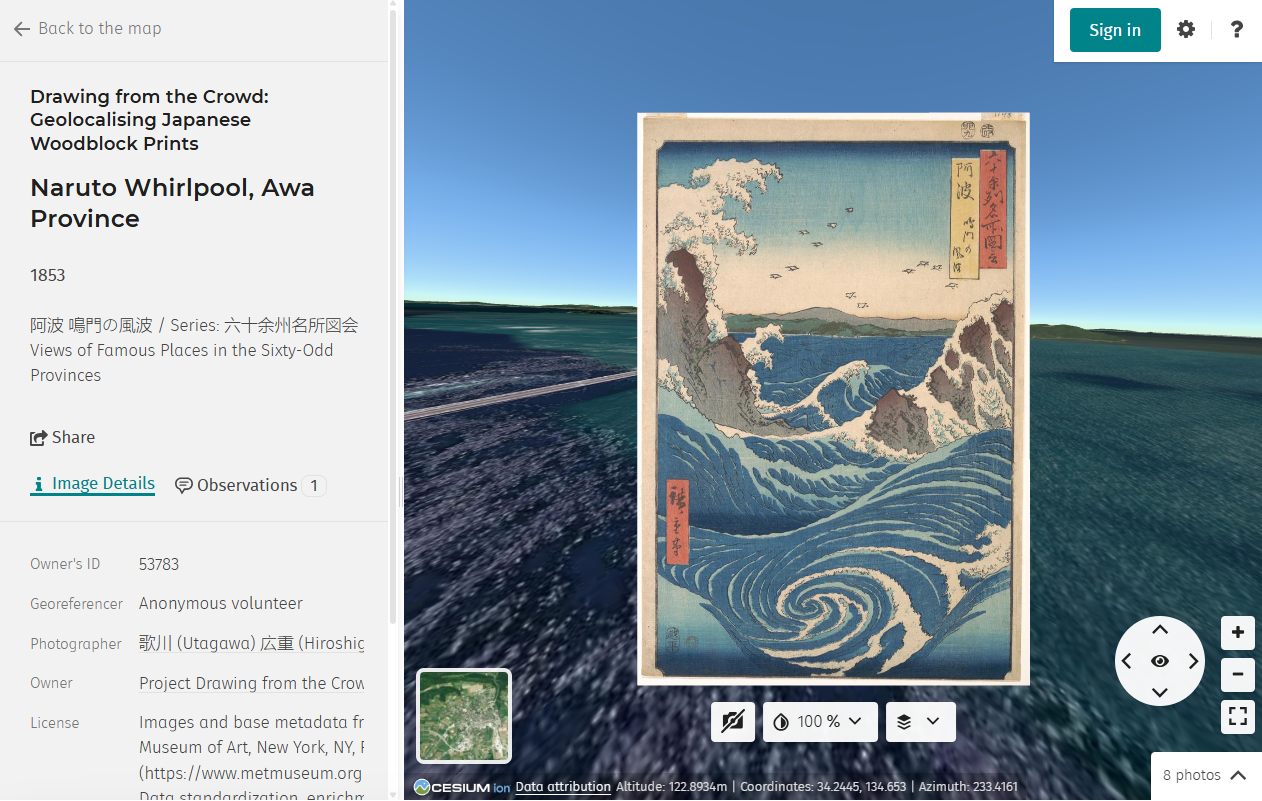
To create an engaging, accessible platform where anyone interested in Japanese landscapes and culture can contribute to scholarship. Through collaborative georeferencing, we aim to identify which elements of a print reflect actual topography and which stem from artistic conventions—features that often coexist within the same image.
Why does this matter? These prints aren't unbiased documents of the past—they're carefully crafted views shaped by artistic convention, market demand, and centuries of visual tradition. A single image might blend faithful topography with imaginative flourishes, or show a famous site from an angle no one could actually stand. By looking closely and pooling our observations, we start to see what earlier viewers took for granted. That's the real discovery: not just the places, but the ways of seeing them.
How You Can Contribute
We need your help to map Japan's historical landscapes! As a citizen scientist, you'll work with beautiful Edo-period prints and help us understand how artists depicted famous places. No prior experience or Japanese language skills required—just curiosity and attention to detail.
What you'll do:
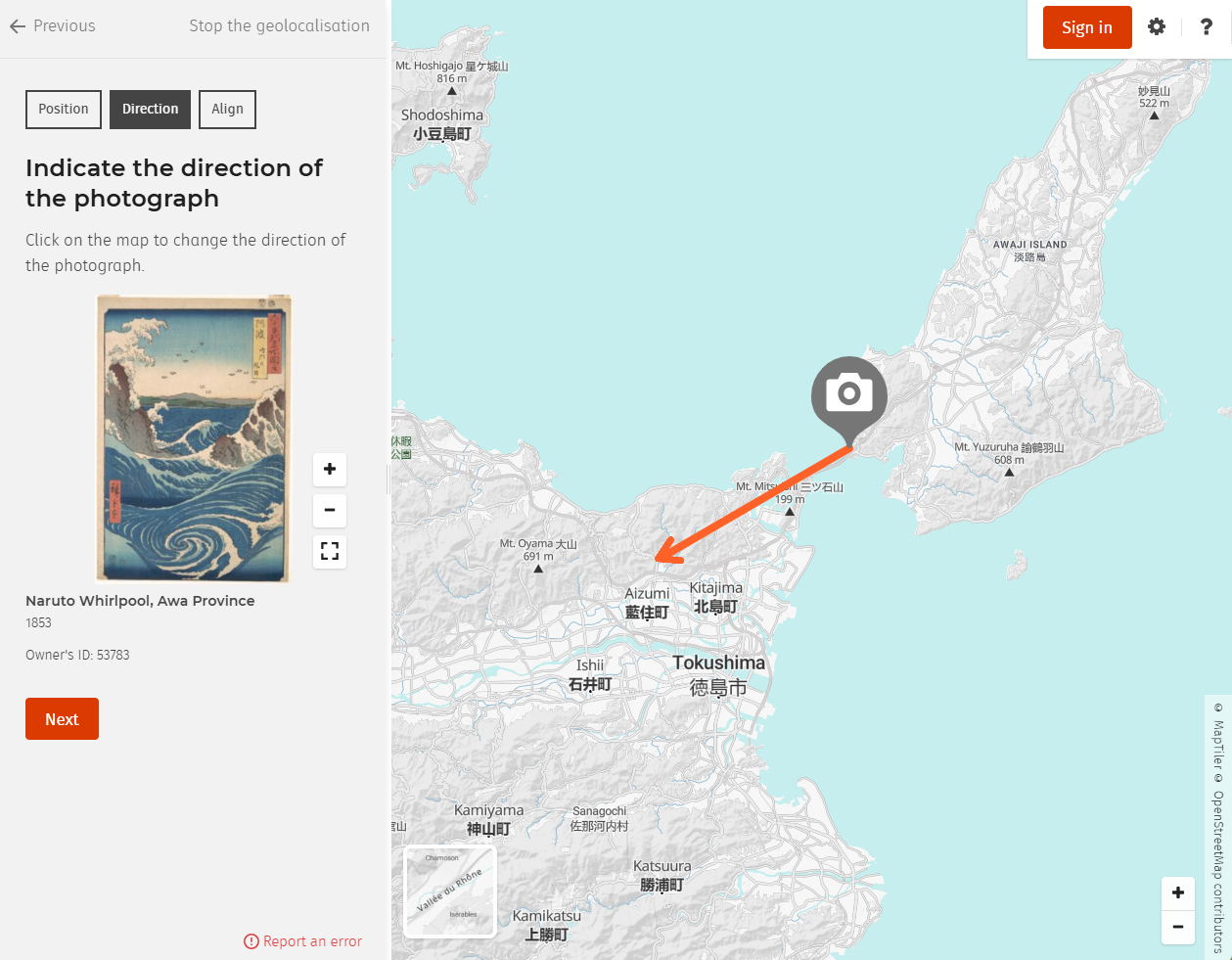
- Identify where you would stand to see the view depicted in a print
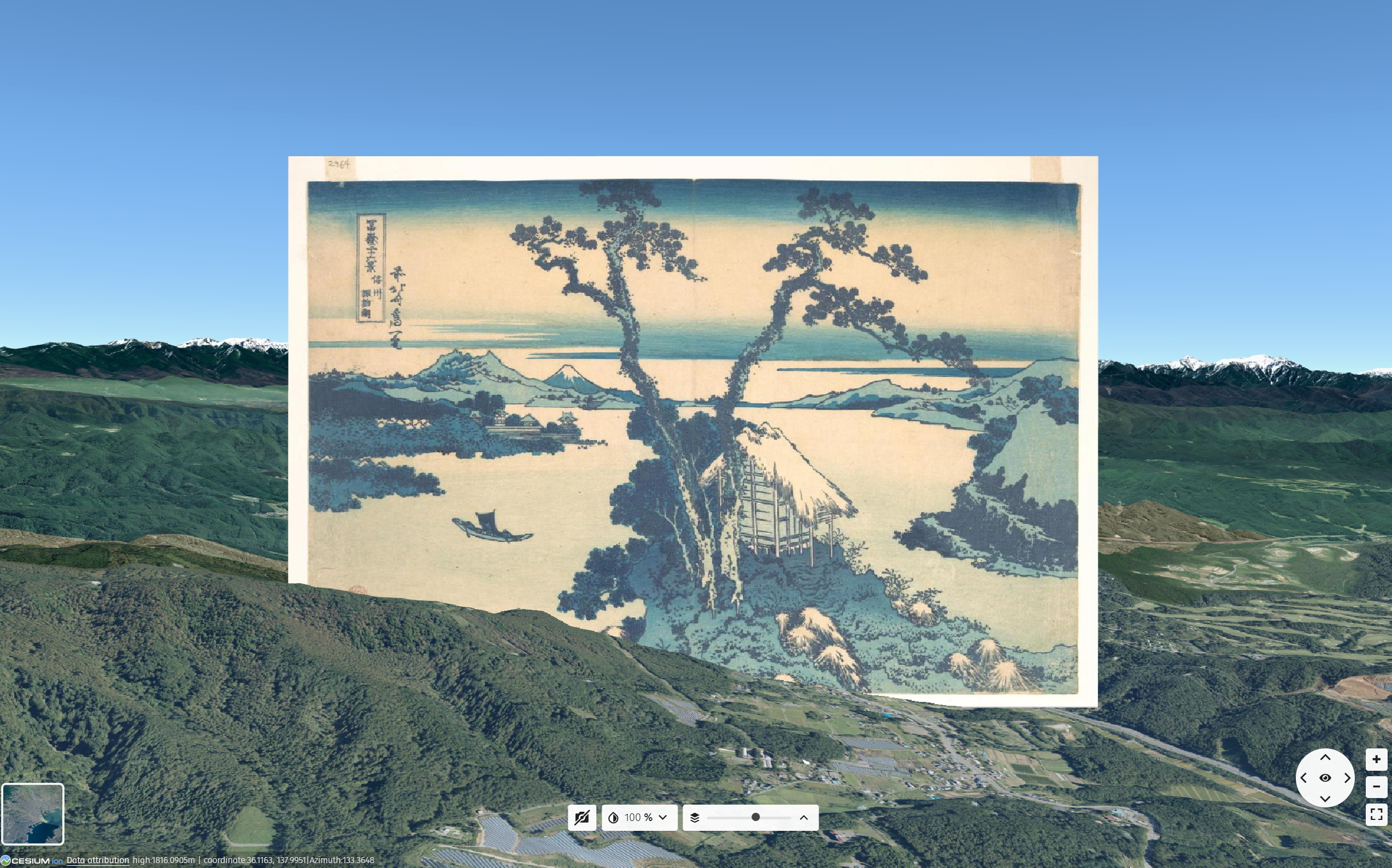
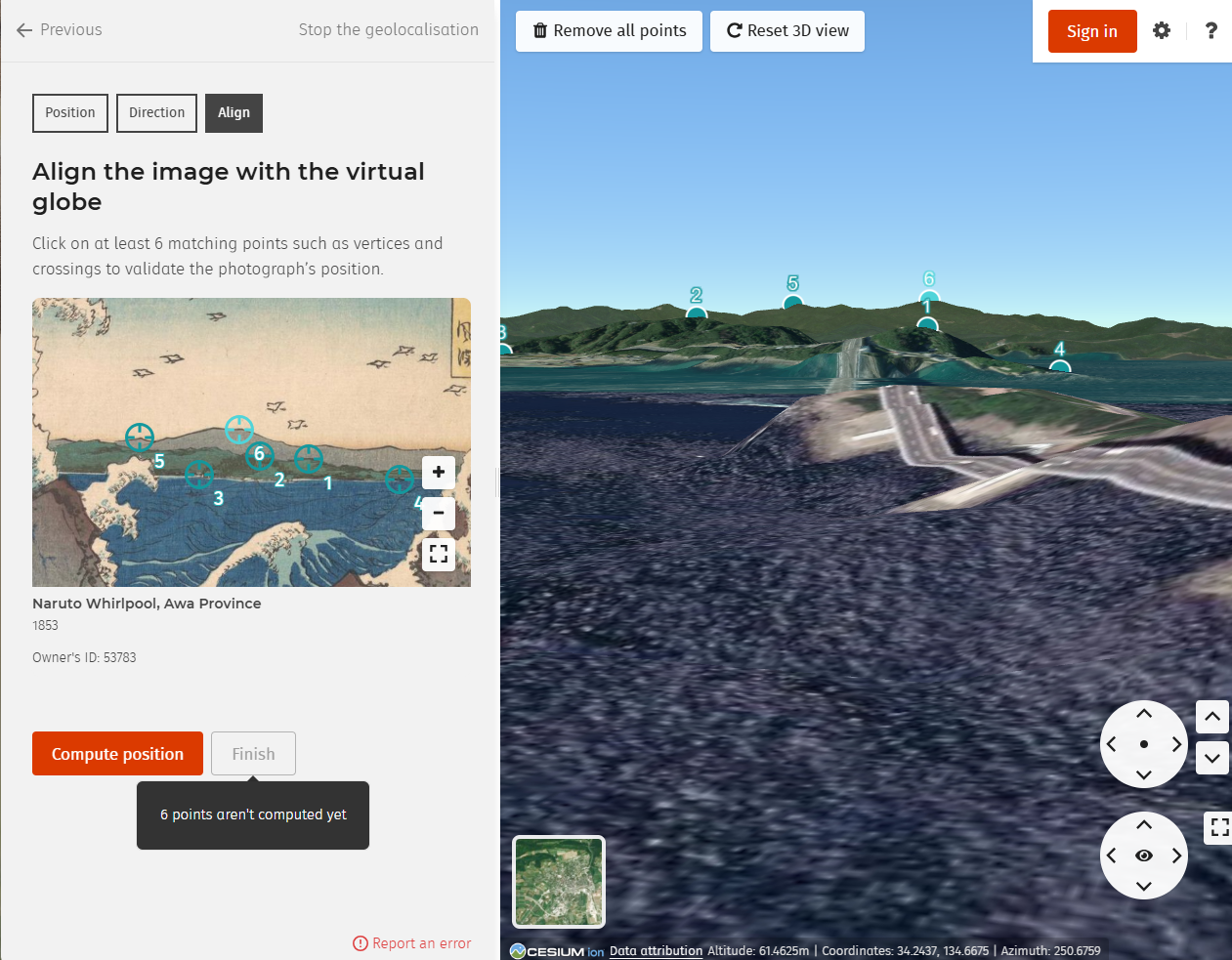
- Match terrain contours in prints with modern-day topography using our interactive 3D tools
- Document which prints engage with actual geography versus imaginary or composite landscapes
What you'll gain:
- Learn about Japanese art history and geography
- Contribute to real academic research
- Join a global community of fellow enthusiasts
- See your contributions acknowledged in research outputs
Each print takes just 15–30 minutes, and every contribution—even "unsuccessful" attempts—provides valuable data for our research.
Discover something interesting? If your contributions inspire a seminar paper, thesis, or research project, you're welcome to develop your insights further. We simply ask that you cite the project in your work.
Recommended citation:
Stephanie Santschi, Himanshu Panday, Hirohito Tsuji, and Drew Richardson, "Drawing from the Crowd: A Citizen Science Platform for Mapping Ukiyo-e Cultural Geography," ThePrintLab, accessed [date], https://landscapes.theprintlab.org.
Ready to start? Visit our Start Mapping guide →
Research Framework
Our project addresses two key questions:
- How can we collectively identify which print features reflect actual topography and which are rooted in visual conventions?
- What can this reveal about how Edo-period prints positioned their viewers to experience Japan's famous places (meisho)?
Platform Features
- Bilingual interface (Japanese/English)
- Interactive georeferencing tools comparing prints with 3D terrain models
- Educational resources about spatial representation in Japanese visual culture
- Community features for sharing discoveries and discussing findings
- Step-by-step guides for participants of all backgrounds
Partners
Drawing from the Crowd is made possible through collaboration with leading institutions in digital humanities and cultural heritage research.
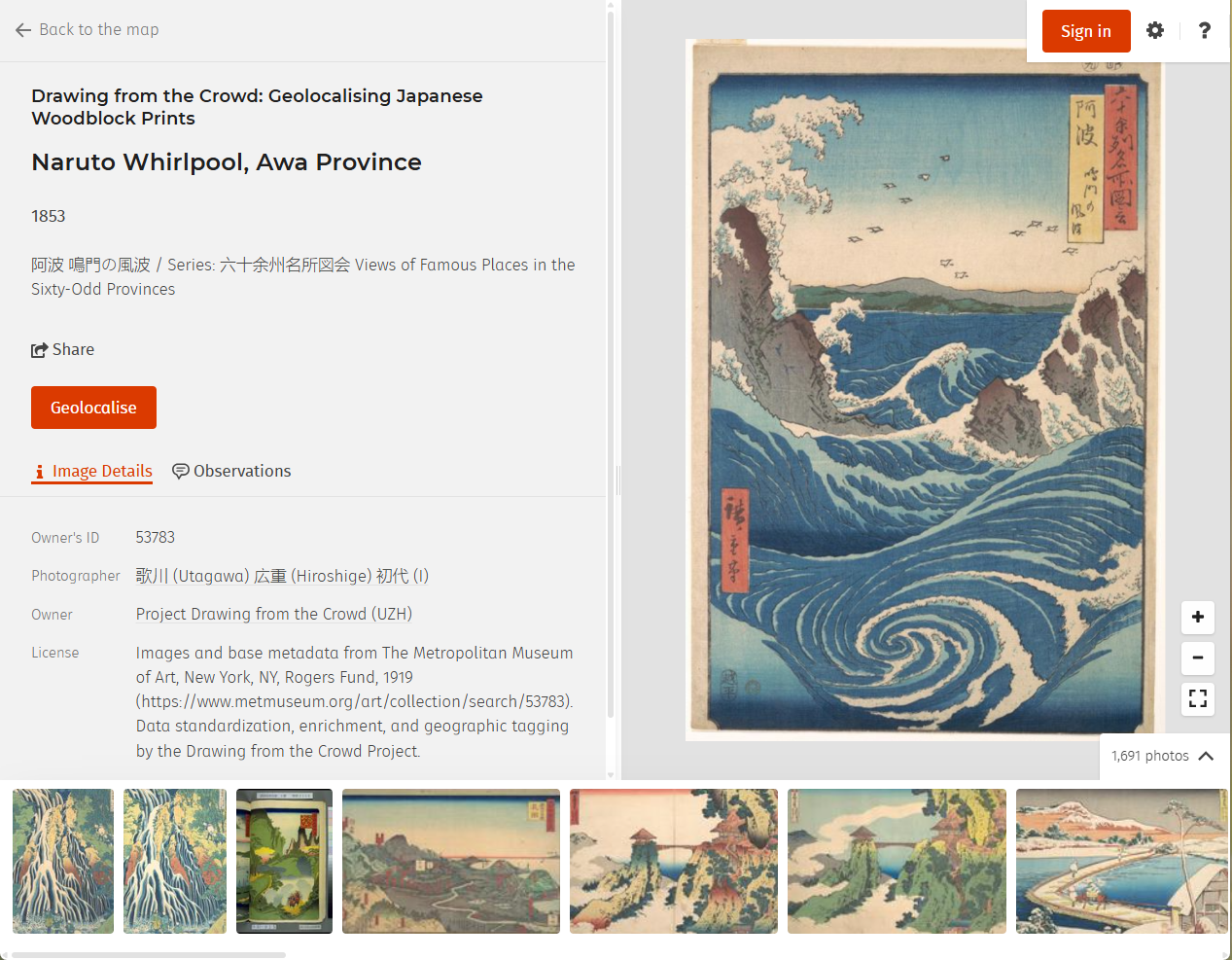
Smapshot Lab (HEIG-VD, EPFL) — Our citizen science platform is built on Smapshot, a crowdsourcing tool developed by HEIG-VD that enables volunteers to locate historical images in a 3D virtual globe.
Art Research Center, Ritsumeikan University — The project is registered at the International Joint Digital Archiving Center for Japanese Art and Culture (ARC-iJAC), and we utilize their comprehensive Japanese Prints Portal Database.
Data Sources
Image and metadata: Metropolitan Museum of Art (New York), Art Research Center, Ritsumeikan University (Ukiyo-e Portal), Japan Search (National Diet Library, Taito City Lifelong Learning Center)
Terrain data: Geospatial Information Authority of Japan (GSI)
Data enrichment: Wikidata and GeoHack Toolforge
Sustainability Goals
This project aligns with the United Nations Sustainable Development Goals:
SDG 4: Quality Education — Our platform makes academic research accessible to anyone with curiosity and an internet connection. Participants learn about Japanese art history, geography, and digital humanities while contributing to scholarship.
SDG 11: Sustainable Cities and Communities — By georeferencing historical prints, we create a digital record of how landscapes were perceived centuries ago, revealing environmental changes and supporting cultural preservation.
Bridging the Digital Divide — In an age of rapid AI advancement, Drawing from the Crowd demonstrates how citizen-generated data can bridge the gap between humanity and its digital environment. Our participatory approach shows that meaningful contributions to knowledge don't require technical expertise—just careful observation and cultural curiosity.
プロジェクト概要
江戸時代の絵師たちは、鑑賞者をどのような視点に置いて日本の名所を体験させたのでしょうか?これが「集合知を描く(Drawing from the Crowd)」の核心にある問いであり、世界中の好奇心あふれる方々と共にその答えを探求しています。
プロジェクト
「集合知を描く(Drawing from the Crowd)」は、2024年度日本財団ソーシャル・イノベーター・コラボレーション(NSIC)に採択された5つの事業のうちの1つとして始まりました。助成の条件として、他の奨学金同窓生と共に社会的インパクトのあるプロジェクトを創出することが求められ、これがプロジェクトの発足だけでなく、学際的分野からの実りある知の出会いにつながりました。この基盤の上に、チューリッヒ大学大学院キャンパスからのキャリア・グラントによる実装資金を獲得しました。
プラットフォームは2025年10月に一般公開され、2025年12月より市民科学アウトリーチを開始しました。現在、世界中の機関とのパートナーシップを通じて版画コレクションを拡大しながら、貢献者コミュニティの構築を積極的に進めています。
私たちの目標
- 市民科学を通じたコミュニティの構築: 日本の文化遺産への理解と歴史的景観への関心を、国内外で育むこと。
- プロジェクトメンバー間の知識の向上: 美術史とデジタル人文学との交差点における、複数言語による学際的研究プロジェクトの専門知識を向上させること。
- 日本の浮世絵研究の発展: 浮世絵版画がどのように空間関係を表現し、鑑賞者を風景体験へと導いたかを評価する方法論を確立し、版画がどのような地理的現実を表しているかの理解に貢献すること。
私たちの使命
日本の風景や文化に興味を持つ人々が、学術研究に貢献できる、魅力的でアクセスし易いプラットフォームの構築に努めます。共同ジオリファレンスを通じて、版画のどの要素が実際の地形を反映し、どの要素が芸術的な表現技法に由来するのかを特定することを目指します。これらの特徴は、同じ作品の中に共存していることが多いのです。
なぜこれが重要なのでしょうか?これらの版画は、過去の客観的な記録ではありません。芸術的慣習、市場の需要、そして何世紀にもわたる視覚的伝統によって丁寧に作り上げられた眺めなのです。一枚の絵の中に、忠実な地形と想像力豊かな装飾が混在していたり、実際には立つことのできない角度から名所を描いていたりすることもあります。丁寧に観察し、皆で知見を持ち寄ることで、かつての鑑賞者が当然のように受け入れていたものが見えてきます。それこそが本当の発見です。場所だけでなく、それを見る方法の発見なのです。
市民による貢献
日本の歴史的景観のマッピングにぜひご参加ください。市民科学者として、美しい江戸時代の版画に触れながら、絵師たちがどのように名所を描いたかを一緒に解き明かしていきます。事前の経験や日本語能力は必要ありません。必要なのは好奇心と少しの注意力だけです。
参加者の役割:
- 版画の景色が見える場所を見つける
- 3Dツールで版画の地形と現代の地形を重ねる
- 実際の地理に基づいた版画か、想像上の風景かを記録する
参加のメリット:
- 日本の美術史や地理について学べる
- 学術研究に貢献できる
- 世界中の仲間とつながれる
- 研究成果に名前が載る
1作品あたり15〜30分ほどで完了します。うまくいかなかった場合でも、それ自体が貴重なデータになります。
面白い発見がありましたか?ご自身の研究やレポートに発展させていただくのも大歓迎です。その際は、本プロジェクトをご引用いただければ幸いです。
推奨引用形式:
Stephanie Santschi, Himanshu Panday, Hirohito Tsuji, and Drew Richardson, "Drawing from the Crowd: A Citizen Science Platform for Mapping Ukiyo-e Cultural Geography," ThePrintLab, accessed [date], https://landscapes.theprintlab.org.
さっそく始めましょう!マッピングガイドはこちら →
研究の枠組み
本プロジェクトでは、主に2つの問いに取り組んでいます:
- 版画のどの部分が実際の地形を反映し、どの部分が絵画的な伝統に基づくものか、みんなの力でどう見分けられるか
- それによって、江戸時代の版画が鑑賞者にどのような視点で名所を見せようとしていたかが分かるか
プラットフォームの特徴
- 日本語・英語の2か国語対応
- 版画と3D地形モデルを比較できるマッピングツール
- 日本の視覚文化における空間表現についての学習資料
- 発見を共有し、議論できるコミュニティ機能
- 初めての方にも分かりやすいステップガイド
協力機関
本プロジェクトは、デジタル人文学と文化遺産研究の分野をリードする機関との協力により実現しています。
Smapshot Lab(HEIG-VD、EPFL) — HEIG-VDが開発したクラウドソーシング・ツール「Smapshot」を基盤としています。歴史的な画像を3D仮想地球儀上で位置特定できるツールです。
立命館大学アート・リサーチセンター — 本プロジェクトは日本文化資源デジタル・アーカイブ国際共同研究拠点(ARC-iJAC)に登録されており、同センターの浮世絵ポータルデータベースを活用しています。
データソース
画像・メタデータ:メトロポリタン美術館(ニューヨーク)、立命館大学アートリサーチセンター(浮世絵ポータル)、ジャパンサーチ(国立国会図書館、台東区生涯学習センター)
地形データ:国土地理院(GSI)
データエンリッチメント:WikidataおよびGeoHack Toolforge
持続可能な開発目標
本プロジェクトは、国連の持続可能な開発目標(SDGs)に貢献しています。
SDG 4:質の高い教育をみんなに — インターネット環境と好奇心さえあれば、どなたでも学術研究に参加できます。日本美術史、地理学、デジタル人文学について学びながら、研究に貢献できる場です。
SDG 11:住み続けられるまちづくりを — 歴史的な版画の位置情報を記録することで、数百年前の風景がどのように見られていたかをデジタルで残し、環境の変化を可視化するとともに、文化遺産の保存に貢献します。
デジタルデバイドの橋渡し — AI技術が急速に発展する今、本プロジェクトは、市民の力で生み出されたデータが人と技術をつなぐ架け橋になれることを示しています。専門知識がなくても、丁寧な観察と文化への関心があれば、誰でも意義ある貢献ができるのです。